
Encircling Existentialism
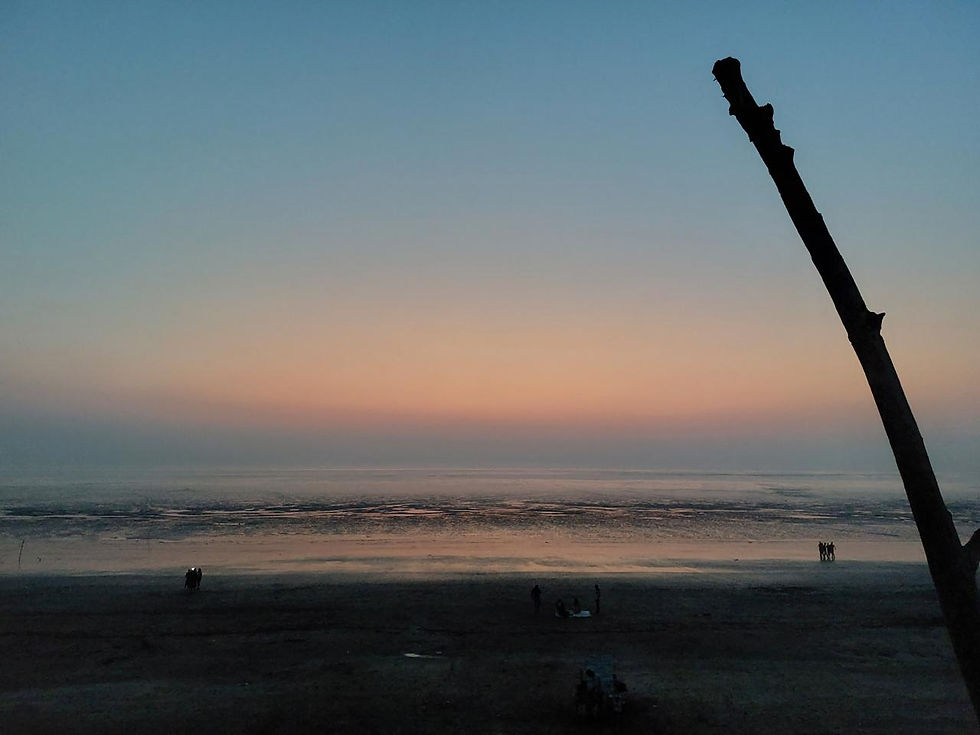
We’ve all heard the familiar wisdom that one shouldn’t judge a monkey by its ability to swim or a fish by its ability to climb a tree. It’s a neat reminder that strengths are context-bound. Yet the metaphor becomes far more revealing when the situation itself is flawed: what happens when the monkey attempts to climb a broken tree, and the fish tries to swim in a marshy, stagnant lake?
Most people still default to the predictable answer: “The tree was there. The water was there. They didn’t try hard enough.” But such thinking is painfully shallow. Failures in such scenarios rarely belong to a single entity—they belong to the entire ecosystem. The monkey wasn’t prepared for a snapped trunk. The fish wasn’t ready for suffocating sludge. The surrounding structures, supports, and systems all failed in their own ways. When an entire castle collapses, who do we truly blame? Not the guard distracted by the queen, but the crumbling walls, the ignored cracks, the faulty foundations.
Systems fail, often quietly, often unnoticeably—and people stuck inside them pay the price. Exposure to such systems gradually reshapes a person. Long enough in a dysfunctional environment, and the mind itself begins to deform. One’s ability to judge situations, outcomes, and even one’s own agency becomes clouded. You start mistaking systemic inadequacy for a personal flaw. You begin to treat collective failure as your own burden, carrying guilt for circumstances you never controlled. And in doing so, you lose the ability to see that individual heroics cannot solve some problems; they require a collective correction that never arrived.
Still, many of us cling to the romantic idea of being the one who overcame the impossible. The miracle mentality. The story of success despite all odds. But we rarely ask the more sobering question: Why were we foolish enough to walk into a situation where miracles were needed in the first place? This tension between personal choice and systemic chaos rarely has clean answers. Who is to blame—you for stepping into a broken environment, or the environment for being broken? Either way, the consequences land on your shoulders.
Yet beyond systemic dysfunction lies a deeper, more revealing flaw: the human desperation to be part of a system at all.
People chase systems with almost religious devotion. They treat them as sanctuaries, as ladders, as cures for all uncertainty. The system becomes a savior—an entity that will provide structure, stability, meaning, and validation. A place where one can shift from being an active player to a passive recipient. Where effort becomes optional, but reward remains expected. And this desperation is not accidental. It is bred into us by culture, education, family, and institutions. We are taught that legitimacy comes from membership. That being part of a system elevates us. That acceptance equals worth. So people chase titles, hierarchies, groups, institutions—not to contribute, but to be legitimized by association. They want the fruit without tending the soil. They want the reputation of belonging without the responsibility of building. The system becomes a mask they can hide inside, a shortcut to identity, a shield from uncertainty. This is how illusions begin. When people enter systems not to serve but to be saved, not to shape but to be carried, they inevitably face betrayal.
Systems are flawed human constructions. They cannot offer salvation when the individuals inside them refuse accountability. What emerges instead is a cycle of dependence and disillusionment—people expecting systems to save them and systems expecting people to sustain them, with neither side willing to carry the actual weight. And the tragedy is that in this pursuit, people forget that the first system they belong to—the only one they truly control—is themselves. Identity becomes outsourced. Purpose becomes external. Selfhood becomes a borrowed reflection. We stop being creators and become spectators of our own lives. And that is where things begin to unravel.
Because here’s the truth: the monkey remains a climber, and the fish remains a swimmer. Their nature doesn’t vanish simply because the terrain betrayed them. But what often gets overlooked is this — systems are not sentient villains conspiring against individuals. They are structures built by people, maintained by people, and flawed because people themselves are flawed.
The real failure arises not from the existence of a broken tree or a stagnant lake, but from our unwillingness to recognize that not every tree is meant for us, not every lake is ours to swim in. It stems from confusing participation with belonging and believing that endurance is equivalent to alignment.
A system becomes harmful only when we surrender our agency to it — when we stay out of habit, fear, or the desperate need to be part of something, without questioning whether that “something” reflects who we are or what we’re meant to do.
The tragedy is not the system itself. The tragedy is entering a system blindly, remaining in it passively, and allowing its limitations to redefine us.
Real strength lies in reclaiming the responsibility that was always ours to understand ourselves clearly, to discern where we thrive and where we shrink, to choose environments that match our nature, and to walk away from those that don’t — not because they are evil, but because they are simply not ours.
In the end, systems will continue to exist — some broken, some functional, most imperfect. But the defining factor is neither their design nor their flaws. It is the individual who chooses where to stand, how to engage, and when to move on.
Because the greatest tragedy is not failing at the wrong task. The greatest tragedy is misusing the freedom to choose — and forgetting that the first and final system we are responsible for is ourselves.
Why are you so busy with this or that or good or bad? Pay attention to how things blend.

Comments